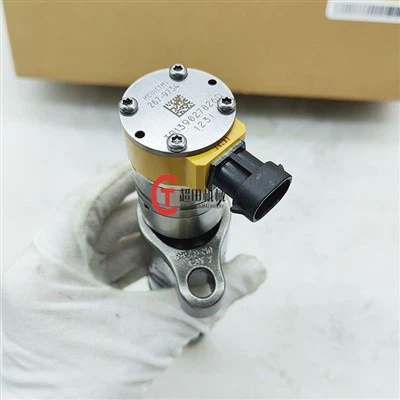
Hey there! As a starter motor supplier, I often get asked about the voltage of starter motors. It's a crucial aspect that can make or break the performance of your engine. So, let's dive right into it and explore what the voltage of a starter motor is all about.
First off, what exactly is a starter motor? Well, it's a key component in your vehicle or machinery. Its main job is to crank the engine and get it running. When you turn the ignition key, the starter motor springs into action, using electrical energy to rotate the engine's crankshaft. This initial rotation allows the engine to start the combustion process and keep running on its own.
Now, let's talk about voltage. Voltage is like the "push" or "pressure" of electricity. It determines how much electrical energy is available to do work. In the case of a starter motor, the right voltage is essential for it to generate enough power to turn the engine over.
Most starter motors for automotive applications typically operate at either 12 volts or 24 volts. The 12 - volt system is the most common in passenger cars and light - duty trucks. It's been the standard for a long time because it's relatively simple and cost - effective. A 12 - volt battery provides the electrical power to the starter motor. When you turn the key, the battery sends that 12 - volt charge to the starter, which then uses it to spin the engine.
On the other hand, 24 - volt starter motors are often found in heavy - duty vehicles, large trucks, buses, and some industrial machinery. These larger engines require more power to start, and a 24 - volt system can deliver that extra oomph. Two 12 - volt batteries are usually connected in series to create a 24 - volt power source. This higher voltage allows the starter motor to generate more torque, which is necessary to turn over the big, heavy engines.
But why does the engine size matter when it comes to voltage? Well, larger engines have more moving parts and higher compression ratios. The compression ratio is the ratio of the volume of the cylinder when the piston is at the bottom of its stroke to the volume when it's at the top. Higher compression means the engine needs more force to start. A 24 - volt starter motor can provide the extra power needed to overcome this higher compression and get the engine going.
Let's take a look at some of the starter motors we offer. For example, the Machinery Engine Parts 4W0697 Starting Motor for 3306 3608. This starter motor is designed for specific engine models and is engineered to work with the appropriate voltage system for those engines. It's built to be reliable and durable, so you can count on it to start your engine every time.
Another great option is the 4HK1 Engine Starting Motor. This starter is tailored to fit the 4HK1 engine and is optimized for the voltage requirements of that particular engine. Whether it's a 12 - volt or 24 - volt system, we make sure our starters are a perfect match.
And then there's the Starter Motor 65.26201 - 7074D 24V for DE12TIS DH370 - 7. As the name suggests, it's a 24 - volt starter motor, suitable for heavy - duty engines like the DE12TIS and DH370 - 7. It's designed to handle the high - power demands of these engines and get them up and running smoothly.
When choosing a starter motor, it's super important to know the correct voltage for your engine. Using the wrong voltage can lead to all sorts of problems. If you use a 12 - volt starter on a 24 - volt system, it might not have enough power to start the engine. On the flip side, if you use a 24 - volt starter on a 12 - volt system, it could overheat and burn out because it's not getting the right amount of power.
There are also some factors that can affect the voltage requirements of a starter motor. The temperature is one of them. In cold weather, the engine oil thickens, and the engine becomes harder to turn over. This means the starter motor needs more power to start the engine. So, in extremely cold conditions, you might need a starter motor that can handle a bit more voltage to ensure reliable starting.
The age and condition of the battery also play a role. An old or weak battery might not be able to provide the full voltage that the starter motor needs. This can result in slow cranking or even the engine not starting at all. That's why it's important to keep your battery in good condition and replace it when necessary.
As a starter motor supplier, we understand the importance of getting the right voltage for your engine. We've got a wide range of starter motors to suit different voltage requirements and engine types. Whether you're a mechanic working on a variety of vehicles or a vehicle owner looking to replace a faulty starter, we've got you covered.
If you're in the market for a starter motor, don't hesitate to reach out. We can help you figure out the right voltage and the best starter motor for your specific needs. Our team of experts is always ready to answer your questions and offer advice. So, whether you need a 12 - volt starter for your car or a 24 - volt starter for your heavy - duty truck, we're here to make sure you get the perfect fit.


In conclusion, the voltage of a starter motor is a critical factor in the starting process of an engine. Understanding the difference between 12 - volt and 24 - volt systems, and knowing which one is right for your engine, can save you a lot of headaches down the road. And with our extensive range of starter motors, you can be confident that you'll find the one that meets your requirements. So, if you're looking to purchase a starter motor, contact us today and let's get your engine up and running!
References:
- General automotive engineering knowledge about starter motors and electrical systems.
- Manufacturer specifications for the starter motors mentioned in the article.